Bull Market 2023–2025: Final Results (27.12.25)Public history, responsibility, and the environment without which you don’t belong in the market
First of all, I want to thank @TradingView
In 2025, I received the WIZARD badge.
This is not just a label — it is recognition of my contribution as an active member of the TradingView Community.
For me, this matters not because of status, but because of responsibility.
This badge means I have the ability to propose changes and improvements to the platform, and some of these proposals have already been implemented.
I’m genuinely glad to be one of those community members who helps make TradingView better for everyone.
Why TradingView is about responsibility, not social media
I have been an active member of the TradingView Community for a long time, and I strongly believe this platform is fundamentally different from any other financial media space.
First — the chart as the core tool of analytical thinking.
Second — publications and the Play button, which lock ideas in time.
Third — and most important — the impossibility of deleting published ideas.
Fourth - indicators
You cannot rewrite history here.
You cannot erase mistakes.
You cannot hide behind “the context has changed.”
That is why I approach every single publication on TradingView with full responsibility.
Why there is no noise or random content here
I do not use TradingView the way many people use Twitter or Telegram.
There are no:
emotional reactions
random thoughts
posts made for reach or hype
As of December 2025, my audience consists of 132,000 followers, and I fully understand the responsibility that comes with that.
Yes, every publication is not financial advice.
But for myself, I set a clear internal rule:
every idea must be logical, verifiable, and honest.
Why the timeline starts in 2023
I intentionally start this review from 2023 because that is when the bottom of the previous cycle was forming.
At the time, it was not obvious to the majority of the market:
- fear was at its peak
- trust was minimal
- negative narratives dominated
I’ve been in the market for a long time and have lived through multiple full cycles.
This Bitcoin cycle was my third, and I consider it the most professionally executed one so far.
Each cycle is different:
- different narratives
- different audiences
- different speed
But market logic and crowd psychology repeat.
Publications that cannot be adjusted after the fact
Back in late 2022, an idea was published:
Bitcoin cycles + logistic curve = New bull run 2023–2025.
This was done before the move, not after.
Every marker you see on this chart represents a public idea published in real time on TradingView.
It’s important to highlight:
- all key ideas were LONG
- there were no public SHORT ideas during the bull phase
Why?
Because in a true bull market, speculating against the trend makes no sense.
The upside potential always outweighs the logic of catching small pullbacks.
Timing and the end of the cycle
If you open each publication, you’ll see:
- market phases
- time-based expectations
- structural projections
On most higher-timeframe ideas, the end of the bull market was publicly marked in red.
My key time reference was stated in advance — September 2025.
September 2025: when most still believed in continuation
Starting in September 2025, while market euphoria was still present,
I began publishing ideas stating that:
- the bull market was over
- positions were closed
- Bitcoin was forming a reversal
- the market was entering a bull trap phase
- you were warned in advance
These ideas were based not on emotions, but on market structure, cycles, and psychology.
Experience, no FOMO, and a mature position
After years in the market, I have zero FOMO.
I don’t worry about:
- missing a coin
- missing a narrative
- not participating in every move
The market is:
- fast
- volatile
- heavily manipulated
You cannot be everywhere.
The core task of the market is simple:
buy low — sell high.
That’s exactly what I’ve been doing for over 12 years, with more than 10,000 hours spent in the market.
The reality of the modern market
Today’s market consists of:
- funds
- corporations
- algorithms
- quantitative strategies
On lower timeframes and chaotic moves, retail traders are simply outmatched.
The gap between emotional decision-makers
and those who operate with structure, data, and discipline
will only continue to widen.
If you are in the market — you must be in the environment
Here I’ll be as direct as possible.
If you are in financial markets,
if you plan to continue trading,
if you want to survive and adapt —
you must be part of a strong community.
A lone trader in today’s market is easy prey.
Over the years, a community of like-minded traders has formed around me — people who:
approach the market systematically
- discuss scenarios
- analyze entries and exits
- stay connected during difficult periods
I share my public ideas for free, and that remains a core principle.
But if you truly intend to stay in this market,
you need an environment, feedback, and shared logic.
What you do next is your decision.
Trading is a marathon
Trading is not a sprint.
It’s a marathon.
Sometimes the best position is no position.
Sometimes the best trade is the one you didn’t take.
Patience, waiting, and discipline are skills —
without them, you don’t belong in this market.
The current moment and what’s ahead
At the moment, crypto is in a phase where I take very few trades.
Some positions are already open — at predefined levels, within a structured risk framework.
I’m not leaving financial markets:
- crypto
- Forex
- equities
- tokenized assets
- gold
- oil
Instruments change. Principles don’t.
In conclusion
If this chart receives 300 likes,
I will publish a separate post outlining:
- goals
- scenarios
- positioning
for 2026.
Wishing everyone clarity, discipline, and a cold mind.
May 2026 be better than 2025.
And may there be peace on our planet.
Yours, EXCAVO
Community ideas
Bitcoin Christmas Rally? $90K/More in SightBitcoin ( BINANCE:BTCUSDT ), as I previously expected , has risen to its initial target and has broken above the important level of $88,200, which is a positive sign for continued bullish momentum.
At the moment, Bitcoin is striving to break through the resistance zone($89,230-$87,720).
From an Elliott Wave perspective, it seems that Bitcoin is completing microwave B of the main wave Y.
I expect that after breaking the resistance zone($89,230-$87,720), Bitcoin could rise at least up to the significant level of $90,300, approaching the Cumulative Short Liquidation Leverage and the 50_SMA(Daily). If BTC breaks above the 50_SMA(Daily), we can anticipate even further gains for Bitcoin.
The question is: do you think Bitcoin will hold above $90,000, or will it begin to decline again?
And finally, a little note about Christmas: I hope you enjoy a wonderful holiday season with your loved ones, and let’s see how Bitcoin performs as we head into the new year!
Cumulative Long Liquidation Leverage: $86,690-$85,990
First Target: $90,161
Second Target: $90,721
Third Target: 50_SMA(Daily)
Stop Loss(SL): $86,850
Points may shift as the market evolves
💡 Please respect each other's opinions and express agreement or disagreement politely.
📌Bitcoin Analysis (BTCUSDT), 1-hour time frame.
🛑 Always set a Stop Loss(SL) for every position you open.
✅ This is just my idea; I’d love to see your thoughts too!
🔥 If you find it helpful, please BOOST this post and share it with your friends.
ETHUSDT Hello Traders! 👋
What are your thoughts on ETHEREUM?
Ethereum has experienced a sharp decline from recent highs and has now entered a corrective phase. Price is currently consolidating within a short-term ascending channel.
At the moment, ETH is trading near the lower boundary of the channel. In the short term, as long as price remains above the key support zone, we expect some consolidation in this area followed by a corrective bullish move toward the upper boundary of the channel.ut trades.
Don’t forget to like and share your thoughts in the comments! ❤️
Bitcoin – The Big Liquidity Hunt is Coming!Bitcoin's price is controlled by banks and governments. They won't allow the price to move until they have acquired the liquidity they need.
Before trading, you should always think about where most retail traders have placed their stop losses. They don't care if you lose; they're after liquidity.
But if you can identify these liquidity pools, you can ride along with the big banks and institutions and profit.
If technical analysis accounts for 20%, psychology is 80% of the story.
The timeframe for this analysis is 4 hours
On the chart, we've marked liquidity pools places where most traders have set their stops with $$$ signs.
The price has been ranging in this zone for 36 days. What happens each time? Liquidity pools form, these pools get swept, and then the price moves.
Now, the liquidity pools we've marked at the lows in red have not yet been swept, and most traders in long positions have their stops just below these two lows. The range from 83,764 to 82,412 is exactly where long traders’ stop losses will be hit, short positions will increase in size, and it is the best zone for a trend reversal.
There are many traders with a bearish view on Bitcoin but guess what happens if these two lows are hit? Longs get stopped out, traders in short positions either add to their size or new shorts join in—and that is exactly where the price will bounce back upwards.
Trading is not hard or complicated if you have a professional coach.
If you have a coin or altcoin you want analyzed, first hit the like button and then comment its name so I can review it for you.
This is not a trade setup, as it has no precise stop-loss, stop, or target. I do not publish my trade setups here.
FREE SUPPORT and RESISTANCE Indicator to Identify Key Levels
In this article, I will show you a simple technical indicator that will help you to identify support and resistance levels easily trading any financial market.
And what I like about this indicator is that it is absolutely free and it is available on all popular trading platforms: tradingview, meta trader 4, meta trader 5, etc.
This indicator is called Zig Zag.
After adding the indicator, the price chart will look like that.
First, I recommend changing its settings .
Price deviation - 1.5
Pivot legs - 5
Here are the inputs that I recommend for structure analysis on a daily time frame.
And in style remove labels because they really distract.
What this technical indicator does, it underlines the significant impulse legs. The completion and initial points of the impulses will be the important structures.
Your key structures will be the areas based on the initial/completion points of impulses based on wicks and candle closes.
A key horizontal support will be based on the initial point of the impulse and the lowest candle close.
Key supports will be all the structures that are below current price levels.
A key horizontal resistance will be based on the initial point of the impulse and the highest candle close.
Key resistances will be all the structures that are above current price levels.
Also, the completion/initial points of the impulses will occasionally compose the vertical structures - the trend lines.
Underline all the supports/resistances based on Zig Zag indicator.
All these structures are significant and can be applied for pullback/breakout trading.
Also, remember that you can modify the inputs of the indicator.
Increase Price deviation and Pivot legs number will show the stronger structures, while decreasing these numbers, more structures will appear on the chart.
On the left chart:
Price deviation - 1.5
Pivot legs - 5
On the right chart:
Price deviation - 5
Pivot legs - 10
The right chart shows just 2 structures, but very important ones.
This indicator is very powerful and it can help you a lot in learning structure analysis.
❤️Please, support my work with like, thank you!❤️
I am part of Trade Nation's Influencer program and receive a monthly fee for using their TradingView charts in my analysis.
Silver - This metal is blowing up now!💣Silver ( OANDA:XAGUSD ) is rallying even higher:
🔎Analysis summary:
Just a couple of months ago, we witnessed another bullish break and retest on Silver. It was quite obvious that Silver will rally accordingly and just recently, we experienced another +150% rally. However, looking at the higher timeframe, Silver is still not done.
📝Levels to watch:
$100
SwingTraderPhil
SwingTrading.Simplified. | Investing.Simplified. | #LONGTERMVISION
EURUSD Pullback Toward 1.17500 Keeps Bullish Structure IntactHey Traders,
In today’s trading session, we are monitoring EURUSD for a potential buying opportunity around the 1.17500 zone.
The pair remains in a well-defined uptrend and is currently undergoing a healthy corrective move. Price is approaching the 1.17500 area, a key zone of confluence where trend support aligns with a former support/resistance level. This area has previously attracted strong participation, making it technically significant.
As long as this level holds, the broader bullish structure remains intact, and a positive reaction here could support a continuation toward recent highs.
don't forget to support us with boost and leave your opinion on the comment section!
Trade safe,
Joe
Silver Potential Area Of ReversalSilver has now become the 3 largest asset class in the world. Inflation-adjusted Silver is now trading at $22, the second-highest point in chart history going back to 1947. And if you remove the Hunt bros fuckery move it's really the highest in history.
A reversal here does not mean the move is over, given the potential of a massive currency crisis that may be coming that no one is really talking about yet in Japan.
Should Silver continue to blow out here would indicate to me we are a lot closer to a Currency Crisis they I think. Which would be horrible for US Stocks and the AI bubble trade.
All it takes is a loss of confidence, and we will skyrocket! Should anyone start to talking about the real problem and it catches fire on Social media. The MEMErs will all pile in.
Keep an eye on JPY 10 year Yield.
f you enjoy the work:
👉 Drop a solid comment
Let’s push it to 6,000 and keep building a community grounded in truth, not hype.
Algorithmic Trading vs Manual TradingWhy the Edge Is Shifting And Why 2026 May Be a Turning Point
As this year comes to an end, it’s the perfect moment to slow down, zoom out, and ask an uncomfortable but necessary question:
Are we trading the markets — or are the markets trading us?
Whether you are in your first year of trading or have spent a decade studying charts, there comes a moment of clarity where you ask yourself:
“If I know what to do… why don’t I always do it?”
Beginners ask this after their first emotional mistake.
Experienced traders ask it after their hundredth.
The market does not punish ignorance as harshly as it punishes inconsistency.
Most traders don’t fail because they lack knowledge.
They fail because they are human.
We all know this pattern:
The entry is clear but hesitation creeps in
The stop is defined but gets adjusted “just a little”
The trend is obvious yet profits are taken too early
The system says don’t trade but emotions say this time is different
At the end of the day, trading is not a battle against the market.
It’s a battle against ourselves.
And that’s exactly where algorithmic (systematic) trading enters the game. Not as a shortcut, not as a holy grail, but as an evolution of execution.
Now, with AI evolving rapidly and tools becoming accessible to retail traders, something big is happening:
The same systematic edge institutions used for years is now available to individuals.
That raises a powerful question:
Can a system (without emotion, instinct, or fear) trade better than a human?
After spending the last 6–8 months deeply immersed in algorithmic trading, intense backtesting, rule-building, and system refinement, I came to a conclusion:
Algorithmic trading is not just the future, it’s the logical evolution of trading itself.
And I strongly believe 2026 will be a major turning point.
Let’s break this down properly.
Manual Trading (Human Trading) → The Strengths & The Silent Killers
Manual trading is where almost everyone starts and for good reason.
What humans do exceptionally well
Pattern recognition
Context awareness and regime interpretation
Macro, narrative, and sentiment understanding
Adaptation during abnormal market conditions
For experienced traders, discretion often becomes earned intuition.
But here’s the uncomfortable truth:
The better you get, the more painful your mistakes become.
Why?
Because you know better yet still break your own rules.
Humans are great at ideas.
But trading success doesn’t come from ideas.
It comes from execution → repeated thousands of times.
And this is where humans struggle most.
The Complete List of Human Trading Failures (The Real Reason Most Traders Lose)
Regardless of experience, humans share the same failure modes.
Here’s the part most people avoid talking about.
Emotional failures
Fear when price approaches entry
Greed when price runs in profit
Panic after one losing trade
Overconfidence after a winning streak
Revenge trading to “get it back”
Execution & discipline failures
Moving stop losses too early
Widening stops to avoid realizing a loss
Taking profit early because “it’s green now”
Ignoring your system once emotions kick in
Changing rules mid-trade
Cognitive biases (even in professionals)
Confirmation bias (seeing only what supports your bias)
Recency bias (overweighting the last trade)
Anchoring to entry price
Counter-trading the trend because price “feels extended”
Lifestyle & state-based issues
Trading tired
Trading stressed
Trading distracted
Trading emotionally impacted by life events
The classic question every trader has asked:
“Why did I take profit so early when the trend was obvious?”
Or:
“Why did I counter-trade when the moving averages clearly showed downside momentum?”
These aren’t skill problems.
They are human problems.
The Hard Truth: Trading Is an Execution Game
Markets reward:
Consistency
Repetition
Risk control
Statistical edge
They do not reward:
Creativity during execution
Emotional intelligence in drawdowns
Smart excuses
Execution quality determines outcomes and execution is precisely where humans are weakest.
Algorithmic Trading → What Changes When Rules Take Control
Algorithmic trading removes the weakest link in trading:
The trader.
A system:
Doesn’t feel fear, stress, fatigue, or boredom
Doesn’t reinterpret rules mid-trade
Doesn’t revenge trade
Doesn’t move stops
Doesn’t second-guess
Doesn’t hesitate
It follows rules.
Every single time.
Key advantages of algorithmic trading
Processes multiple data points simultaneously
Executes instantly during fast price action
Trades 24/7 without fatigue
Applies identical risk rules every trade
Can be objectively tested and measured
There is no emotional deviation.
And that alone is a massive edge.
“But Humans Have Instinct” — The Big Myth
Instinct is just pattern recognition shaped by experience.
And patterns can be quantified.
If a trader can explain why they take a trade
that logic can be turned into rules.
And rules can be executed better by machines.
Win Rate Reality — How High Can It Really Go?
When I began researching existing algo traders:
Some had ~60% win rates with solid returns
Some reached 70–80%
That sparked a question I wrote down and circled:
“Is a 90% win rate even possible?”
So I tested.
Started with swing trading systems
Moved to intraday
Then scalping
Simplified rules instead of complexity
Tested only what truly mattered
After months of backtesting and refinement:
Achieving high-precision win rates of 80–90% across various asset classes, with drawdowns kept to an absolute minimum.
It proved something deeper:
Precision trading is possible when emotion is removed.
Important Reality Check (Especially for Experienced Traders)
High win rate does not automatically mean profitability.
What truly matters:
Risk-to-reward
Drawdowns
Expectancy
Consistency
Longevity over multiple market regimes
A system must survive:
Trending markets
Ranging markets
High volatility
Low volatility
Durability beats elegance.
Always.
The Real Future of Trading (2025–2030)
Here’s how I see it:
More traders will become system builders, not button clickers
Manual trading will shift toward monitoring & strategy design
AI will assist in:
Data filtering
Pattern discovery
Optimization
Hybrid approaches will dominate:
Machines execute
Humans supervise
Manual trading won’t disappear
but manual execution will.
My Personal Conclusion
Manual trading becomes validation
Algorithmic trading becomes execution
Humans decide what to trade
Systems decide how to trade
That’s evolution.
Final Thoughts — End of Year Message 🎄
As the year comes to an end, take time to reflect:
What worked
What didn’t
Where emotions interfered
Where rules could replace decisions
Trading is a long-term game.
The goal isn’t to trade more
it’s to trade better.
Merry Christmas to everyone!
May the next year bring clarity, discipline and growth — both in trading and in life.
The edge is shifting.
And those who adapt early will lead.
Would love to hear your thoughts:
Are you trading fully manual?
Hybrid approach?
Or already building systems?
_________________________________
💬 If you found this helpful, drop a like and comment!
GOLD – Bullish Continuation After Clean BreakoutGOLD – Bullish Continuation After Clean Breakout
Gold remains firmly bullish after breaking above the key resistance zone around 4,380, which has now changed into strong support. This breakout was followed by a clean continuation structure, with price respecting the rising channel.
As long as gold holds above the 4,430 support area, the bullish bias remains intact. The market is consolidating above previous resistance, which increases the probability of another impulsive leg higher.
🎯 Upside targets:
4,550
4,600
A pullback into support could offer better risk-reward opportunities, while a sustained hold above the current structure keeps buyers in control.
You may find more details in the chart!
Thank you and Good Luck!
PS: Please support with a like or comment if you find this analysis useful for your trading day
ZECUSDT is preparing for a local rally Focus on the resistance triangle or liquidity zone 457.78 - 470.0. For several days, the market has been building up potential ahead of the zone, which is likely to be directed towards breaking through the border. Closing above 470.0 will be a strong signal for growth.
Consolidation continues, forming a bullish structure in which the market does not update its lows.
A U-formation with consolidation (cup with handle) is forming on the chart.
Scenario: Before breaking through resistance, there may be a short squeeze at 420.0. However, breaking through the 457-470 zone and closing above it will lead to growth to 547.
The Impact of Overtrading on Trading PerformanceMost traders don’t lose because they lack knowledge. They lose because they trade too much.
Overtrading is one of the most common, yet least talked-about reasons why trading performance slowly deteriorates over time.
Overtrading is not about skill – it’s about behavior
Overtrading doesn’t mean you don’t understand the market.
In fact, many traders who overtrade know quite a lot.
The problem starts when:
You stay in front of the screen for too long
You feel the urge to always be “in a trade”
You confuse activity with productivity
At that point, trading becomes reactive , not strategic.
More screen time does not equal better performance.
Often, it leads to fatigue, impulsive decisions, and emotional trades that were never part of the original plan.
Avoid impulsive decisions – the real damage of overtrading
One of the biggest impacts of overtrading is impulse trading.
This usually shows up when:
You enter trades without a clear setup
You chase price after missing a move
You trade just to feel involved
Impulsive trades rarely come from a strong edge.
They come from emotions : fear of missing out, boredom, frustration, or the desire to “do something.”
And emotions are the fastest way to destroy consistency.
Prioritize your trades, not the number of trades
Professional traders don’t aim to trade more.
They aim to trade better .
That means:
Selecting only high-quality setups
Ignoring average or unclear conditions
Accepting that most market movements are not worth trading
Every trade should earn its place.
If a setup is not clear, not aligned with your plan, or not offering a real edge, it should be skipped.
Fewer trades, but better trades, lead to better performance.
Learn from mistakes instead of repeating them
Overtrading often creates a dangerous cycle:
Trade too much → Make small mistakes → Lose confidence → Trade even more to fix it.
Breaking this cycle requires stepping back and reviewing:
Why you entered certain trades
Whether they followed your rules
What emotional state you were in
Mistakes are not the problem.
Failing to learn from them is.
Trading improves when reflection replaces reaction.
Why reducing screen time improves trading performance
One of the most effective changes I ever made was simply reducing screen time.
Less screen time means:
Fewer impulsive entries
Better emotional control
Clearer decision-making
You don’t need to watch every candle.
You only need to be present when your setup appears.
Sometimes, the best trade is no trade at all.
BTC/USDT (15m) – Cup Formation, Pullback Into Trend SupportHi!
BTC is developing a well-proportioned Cup formation on the 15-minute timeframe, signaling a constructive recovery after the recent decline. The rounded base reflects gradual absorption of supply rather than panic selling, which is a healthy characteristic of continuation structures.
Following the impulsive breakout from the right side of the cup, the price entered a short-term consolidation below resistance, forming a mild pullback. This retracement is technically logical and currently aligns with the rising trendline, which acts as dynamic support. Such pullbacks often serve as momentum resets rather than reversals, provided structure remains intact.
The highlighted supply zone above the price explains the temporary hesitation. Acceptance above this zone would confirm strength and open the path toward the 90,200–90,600 area, matching the projected continuation from the cup structure.
Overall, this is a technically logical setup favoring continuation, with well-defined risk and invalidation.
Bitcoin vs Gold: The Big Monthly Retest- Price is now back inside a huge support area that has mattered since 2021.
- In the past, this zone often marked bottoms where Bitcoin stopped losing vs gold and sometimes started a new run up.
- Recent move down = gold stronger than BTC lately.
- The idea on the chart:
- Some sideways “ping‑pong” inside the box ⚾
- Then a possible break higher if buyers defend this zone.
- Trading view of this level:
- Monthly support = slow and noisy , with fake breaks and long wicks.
- If entering here, think small size clear invalidation below the box, and patience.
- A series of higher lows and a break above the short range would be the first hint that BTC is ready to outperform gold again. 🚀
Ripple (XRP): Getting Ready To Sell This One!XRP is not really a surprise here. We were never big believers in XRP, even though it had a strong push about a year ago. Since then, price has mostly been moving sideways, and now we are starting to see clearer signs of a sell-off building up.
EMAs are shifting and slowly pointing the trend lower, which tells us buyers are losing control. In our personal opinion, XRP actually deserves a deeper correction compared to many other coins that already flushed harder.
What we are watching now is the local support zone. If sellers manage to take control below this area, we would expect XRP to transition into a proper downtrend from here. That move would open the door for continuation lower rather than another sideways phase.
Swallow Academy
BTC/USDT: Compression Phase Inside a Broad StructureHi!
Market Structure:
Bitcoin is currently trading inside a well-defined symmetrical triangle, characterized by a series of lower highs and higher lows. This structure reflects price compression and balance, not trend continuation.
Key Boundaries:
Price continues to respect both the descending upper boundary and the ascending lower boundary, confirming the validity of the pattern. No directional breakout has occurred yet.
Price Behavior:
Recent moves remain corrective, with repeated rejections from the upper boundary near 88.3k–88.5k, while buyers defend the rising support around 87k–86.8k.
Scenarios:
Bullish: A confirmed breakout and acceptance above the upper boundary would favor upside expansion.
Bearish: Rejection and loss of the lower boundary would shift momentum to the downside.
AVAXUSDT - The hunt for liquidity before the fall BINANCE:AVAXUSDT , within the context of a global downtrend and low liquidity associated with market conditions, is forming a short squeeze ahead of a possible decline.
The global trend is protracted and downward, which generally indicates the dominance of bears in the medium and long term.
Bitcoin is consolidating against the backdrop of a downward trend, which generally creates negative sentiment in the market.
AVAX is forming a short squeeze of consolidation resistance at 12,460, formed against the backdrop of a global downward trend. This is a manipulative maneuver to accumulate liquidity before a possible decline.
If the bears keep the price below 12.540 - 12.460, then a decline can be expected in the short and medium term.
Resistance levels: 12.46, 12.54
Support levels: 12.03, 11.94, 11.26
A false breakout of resistance could confirm the end of the correction or consolidation and trigger a continuation of the main downtrend.
Best regards, R. Linda!
Will a Euro buy $1.75 dollars by 2029? - December 2025Today a Euro will buy you 1.178 dollars.. A forecast of 1.75 is 50% above. That's wild.
In this report it is proposed a Euro could gain 50% dominance over the dollar during the next 2-3 years. That’s more than a forecast, that’s regime change. The majority of the move could very well be over in the next 18 to 36 months, look left at previous impulsive moves. In Forex, a move like that over 24 months would be unprecedented for major currencies in modern times without some significant economic shift (like high inflation in the US, Eurozone booming, or dollar losing reserve status, or a combination of all). Usually currency forecasts aren’t that extreme unless it’s a very long-term or speculative scenario.
The highlights:
A significant dollar value collapse
Exports from the EU to the US become increasingly expensive. (Before the consideration of tariffs).
A fall in US living standards continues (access to health care, affordable accommodation, global technological advancement while the US stands still, debts thwarting social mobility)
“Opportunity cost”, Investors want assets denominated in appreciating currencies. Modest Euro based equity returns return far greater value than US listed equities that over-perform.
How is this possible? Europe is burning, the end is nigh, haven't you seen the News?
Headlines from the last 10 days:
“ Trump thrashes European leaders in wide-ranging interview: ‘I think they’re weak ”. Said the man who promised he’d end the Ukraine war within 24 hours after taking office. How’s that going mate? Day 340 and counting.
“ The Real Reason Why the Trump Administration is So Mad at Europe ”
Spoiler: They’re not buying enough of our stuff, apparently. Which is rich coming from an administration currently in the process of telling everyone else to sod off and stop selling us stuff.
“ Donald Trump is pursuing regime change in Europe ” Nothing says “Land of the free” quite like attempting to install puppet governments in allied democracies. Very on-brand.
“ Trump administration says Europe faces 'civilisational erasure ” From the people who brought you “Me must take Greenland” and “Injecting bleach”, this is their geopolitical analysis. Brilliant.
Europeans must be sat there with their espresso wondering, “Hang on, who’s the bigger threat, Putin with his obsolete tanks or Trump with his tariffs and tantrums?”.
The rhetoric toward the European continent has been genuinely remarkable. Certainly in my lifetime and moreover, from an ally. But here’s the thing, and pay attention because this where it becomes interesting, every narrative eventually gets a chart and charts don’t lie. You don’t fling this amount of mud, whip up distraction, unless you want the gaze of media to focus elsewhere. The headlines aren’t coincidence, they are symptoms.
Consider this absolute masterclass in economic self-sabotage the USA has arrived at today, which the media are blissfully ignoring:
Relies heavily on Chinese imports (because making stuff is hard and China’s really good at it).
Has erected trade barriers with most of their suppliers (Think Brexit but on steroids. And by the way, how is Brexit working out? Someone from the UK care to comment? Anyone?)
Embraced a path of political uncertainty (Every day is like a lucky dip, except the prizes are all terrible.)
Citizens randomly stripped of agency (Rights? What are those?)
Tourists actively avoiding travel to America (Nothing says “Welcome” like the threat of detention and a complimentary cavity search). (Almost 6% of GDP comes from tourism, yeah $2.1 trillion and 15 million jobs).
Argentina, could you have picked a worse moment to consider dollar adoption?!
If there’s one thing investors absolutely despise, it’s political uncertainty. Does not matter if government is left, right, up, down, on day release from the lunatic asylum. Markets need confidence in what next year might look like, not anxiety about tomorrow’s 3am Truth Social post. They want year by year predictability, not day by day chaos.
And here’s the kicker: When you throw up import barriers, tell your allies their civilisation is doomed, threaten tourists with detention… . then you're not just alienating people you are inadvertently telling the entire world that the US is closed for business. Investors will now ask themselves “Why should I hold onto dollars?”.
De-dollarisation / US dollar hegemony
The majority of dollars in circulation exist outside America. If you’re an international investor looking to de-risk US market exposure, then you’re more likely to sell dollars in favour for a more attractive investment at home. International investors do not hold dollars for the sake of it other than to purchase US assets. Turn that around, those same investors could spark a mass dollar sell off, collectively sending those dollars back to the US. The FED won’t need to print to free up liquidity in this event.
Meanwhile, Europe remains open for business. As is Canada, Asia and South America. (UK not so much as they figure out who to tax next. They love taxes over there). You don’t need a PhD in economics to figure out the future, a history book will do that. Money like water flows to where it’s welcome. And right now America is basically extending the middle finger to international investors. The gloves are off, unless you’re delayed at passport control…. then the middle finger is.. moving on…
The world, it seems, has had enough of dollar hegemony. US dollar dominance is declining gradually as nations diversify away from dollar dependence. It is well known multi decade trend, not an imminent crisis.
This is not necessarily a bad thing for the US given the debt, a dollar value collapse would help melt the debt away. However the price is steep, a collapse in global influence and living standards. The fall in living standards is already notable in the US for outside observers, which is a rather grim set of circumstances to begin with if you're a worker resident in the US who gets by month to month.
What’s happening exactly?
The US dollar’s share of global foreign exchange reserves has dropped from 71% (2000) to approximately 58% (2024). Central banks are accelerating this shift with:
1. Gold purchases: Central banks bought record amounts in 2022-2023, with China, India, and other leading accumulation.
2. Bilateral trade: China-Saudi oil deals, India-Russia rupee-ruble trades, ASEAN local currency settlements
3. BRICS expansion: 9 members now representing 45% of global population, exploring alternative payment systems.
Why it matters
Sanctions accelerated the trend. After Russia’s SWIFT exclusion in 2022, countries with geopolitical concerns fast-tracked dollar alternatives. Even allies are hedging. But the dollar isn’t going anywhere soon. No currency rivals its liquidity, legal infrastructure, or depth of US capital markets. The Euro, Yuan, and others have structural limitations. But that does not mean dollar can operate with impunity as directed by US policy, far from it.
What currency will benefit the most from a dollar collapse?
The Euro. And the charts know’s it.
Studied multiple currency pairs, with a natural bias leaning towards CNY. Imagine my surprise to see the Euro in a breakout with positive macro uptrend against CNY, the US dollar, and competing currencies. The Euro currency is set to outperform significant players. That is not necessarily a good thing for European countries, especially those with high debt to GDP ratios. If EUR rallies aggressively, it can:
1. Tighten financial conditions in Europe,
2. Drag inflation down,
3. and push the ECB toward easier policy relative to the FED
However the trend is clear, the market has spoken, for the next few years it is clear where the game is.
Euro vs Chinese Yuan
Euro vs Japanese Yen
Euro vs British pound
The technical analysis
The technical analysis suggests euro is about to enter a strong macro uptrend. Not just a continuation of the 14% move in a single year thus far, that was just a mere Amuse-bouche. No, the main course is yet to come. On the above 2 month chart:
A clear uptrend, higher highs higher lows.
Price action and RSI resistance breakouts.
That blue line, that’s the 100 RMA (Rolling Moving Average), don’t ignore that line on any asset once support or resistance is confirmed.
3 month Hammer candle (see below)
A typical 8 year run to the swing high. However that period is reduced to 2-3 years after the resistance breakout.
The bull flag forecasts circa 50% rise until the flag target is met.
The forecast should be met on or before 2030.
3 month chart - Hammer candle
Conclusions
This is a long-cycle thesis, not a short term prediction. The core view is that EURO Vs USD is entering a multi-year uptrend as global investors incrementally diversify currency exposure as relative policy / fiscal backdrop becomes less supportive for the US dollar. The €1 = $1.75 outcome is a tail scenario, not the base case. A move of that magnitude would require a combination of material USD weakness, a persistent shift in global capital allocation, and sustained rate / growth dynamics that remain favourable to the Euro. It is not “normal” for such a macro move to occur over an 18-36 month period. But that’s exactly what happened during the period from 1985 to 1987, and 2002 to 2005.
The technical structure supports an upward bias, but the macro will decide the ceiling. The chart setup (trend structure, breakout behaviour, and continuation patterns) argues for euro strength, yet the durability of any upside is ultimately constrained by fundamentals, rate differentials, growth, inflation credibility, and Europe’s sensitivity to a strong currency.
What validates the thesis?
Continued evidence of USD risk rising (fiscal and credibility), sustained euro resilience versus other currencies with price holding above key breakout levels on higher timeframes.
What would invalidate the thesis?
A clear re-acceleration in U.S. growth relative to Europe, a materially more hawkish FED path versus the ECB, or a breakdown back below the breakout structure on monthly closes. Should add, it would be perfectly normal to see a dollar spike during corrections in the stock market. That is normal, but not an invalidation to the macro outlook presented here.
Perhaps a renewed USD safe haven bid is seen, in the event of a stock market crash, for example. But I see no evidence of that occurring. The recent idea “ S&P 500 to 10,000 inside the next 4 years - December 2025 ” seems like a positive move for the stock market, no? But if the index rallies 40% and the underlying dollar drops the same if not more against other currencies, then no real value has been gained, just a re-pricing, a 4 year nothing burger. This brings us to the subject of “ opportunity cost ”
Shrewd investors would be wise to find exposure of oversold European based businesses traded against the Euro before a dollar collapse. Many European listed stocks saw remarkable gains during the previous impulsive move whilst their US counterparts nosedived. Consider the missed opportunity here if you're a US investor during the 2000 to 2008 period:
Volkswagen Group 1000%
Ford motor company -90%
We’re not saying or advocating an exit from US equities, but rather, US listed businesses are going to have a far harder hill to climb if you truly care about extracting value from the markets, not price. Ultimately this idea is about maximising your “Opportunity cost of capital” during uncertain times as one of the greatest wealth transfers in history is about to get underway. That opportunity will be life changing for those of you that understand the message written above.
Ww
==============================================================
Disclaimer
This thesis is provided for informational and educational purposes only and does not constitute financial, investment, legal, tax, or trading advice. All views expressed are opinions as of the date of writing and may change without notice. Past performance, backtests, and technical patterns are **not** reliable indicators of future results.
You should conduct your own research, consider your financial situation and risk tolerance, and consult a qualified professional before making investment decisions. The author assumes no responsibility for any losses arising from the use of this material.
Lingrid | BNBUSDT Potential Downside Break After Swap RejectionBINANCE:BNBUSDT perfectly played out my previous trading idea . Price is trading below a descending trendline while struggling to reclaim the swap zone, suggesting sellers still control the short-term structure. Recent rebounds appear corrective rather than impulsive, with price repeatedly failing to hold above the broken range. The overall flow continues to favor distribution inside a pressured channel.
If the swap zone around 860–870 acts as resistance again, price could slip back below the channel floor, opening room toward the 790 support band where previous demand was formed. Momentum remains fragile, and a rejection here may accelerate downside continuation.
➡️ Primary scenario: rejection from 860–870 → breakdown toward 790.
⚠️ Risk scenario: sustained acceptance above 870 weakens bearish pressure and shifts focus back toward 920.
If this idea resonates with you or you have your own opinion, traders, hit the comments. I’m excited to read your thoughts!
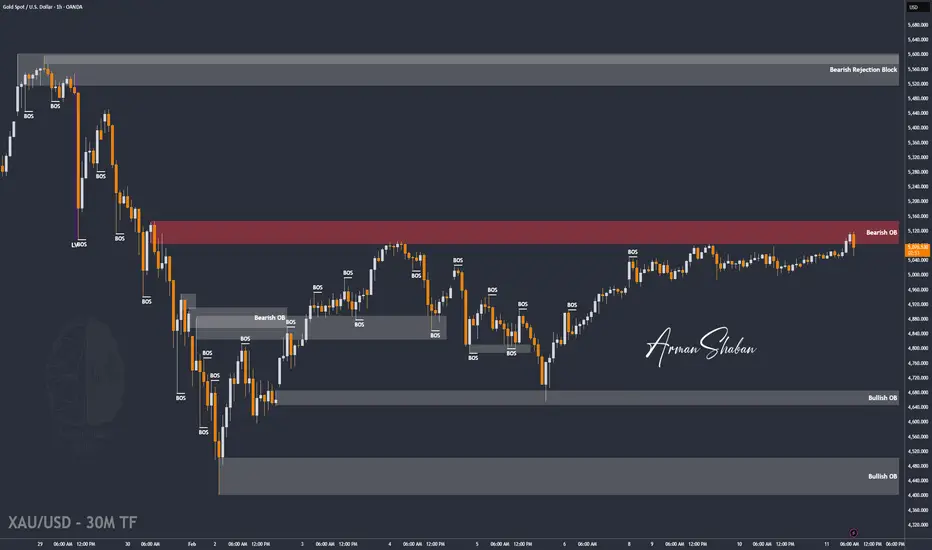
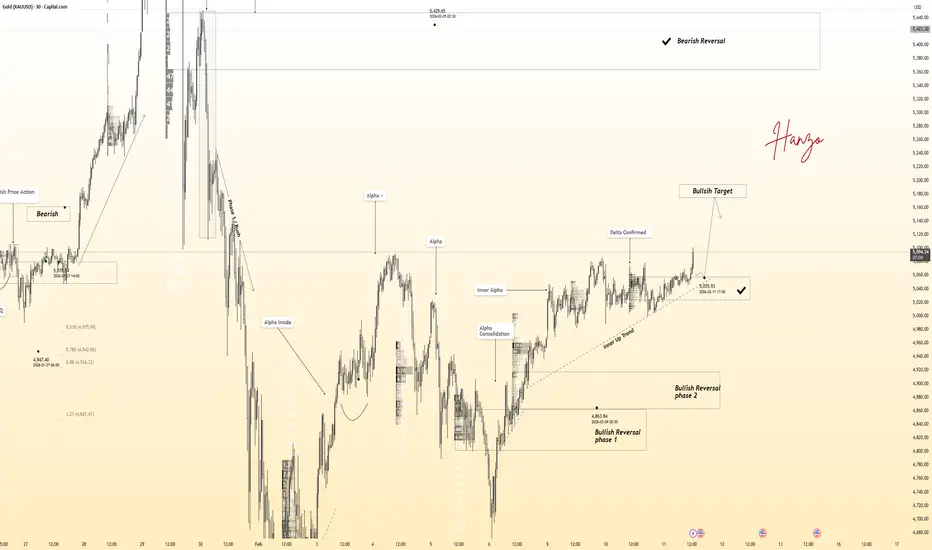
XAUUSD – Bullish Continuation Setup (30M)Buy Zone: 4,520 – 4,530
Stop Loss:Below 4,500
Targets
TP1: 4,550
TP2: 4,600 – 4,610
Price is holding above ascending trendline and key demand. Bullish structure remains intact. A clean break and hold above resistance can trigger continuation toward the upper target zone.
GBPUSD Pullback Toward 1.34500 Keeps Bullish Trend in Play!Hey Traders,
In the coming week, we are monitoring GBPUSD for a potential buying opportunity around the 1.34500 zone.
The pair remains in a well-established uptrend and is currently undergoing a controlled correction. Price is approaching the 1.34500 area, a key zone where trendline support converges with a former support/resistance level, making it a technically important area to watch.
As long as this level holds, the broader bullish structure remains intact, and a constructive reaction here could open the door for a continuation toward higher levels.
don't forget to boost and leave your opinion in the comment section!
Trade safe,
Joe
STABLEUSDT | Perfect C&H FormationHello traders,
A perfect C&H formation is always welcome to see on our charts. Pretty simple with a very good R:R
What you want to look for as a TP target is the same depth of the cup.aka.distance from SH to SL.
Good Luck!
All our analysis is shared with honesty, care, and real effort. If you find value in it, a like or comment means a lot to show your support🙏📊